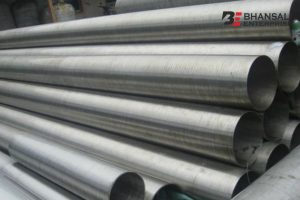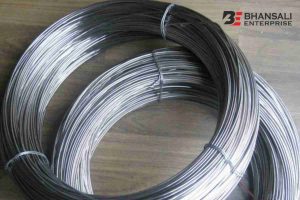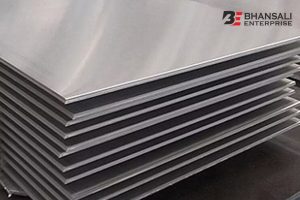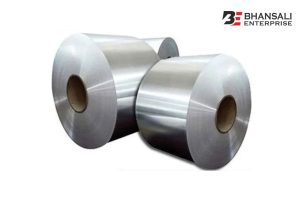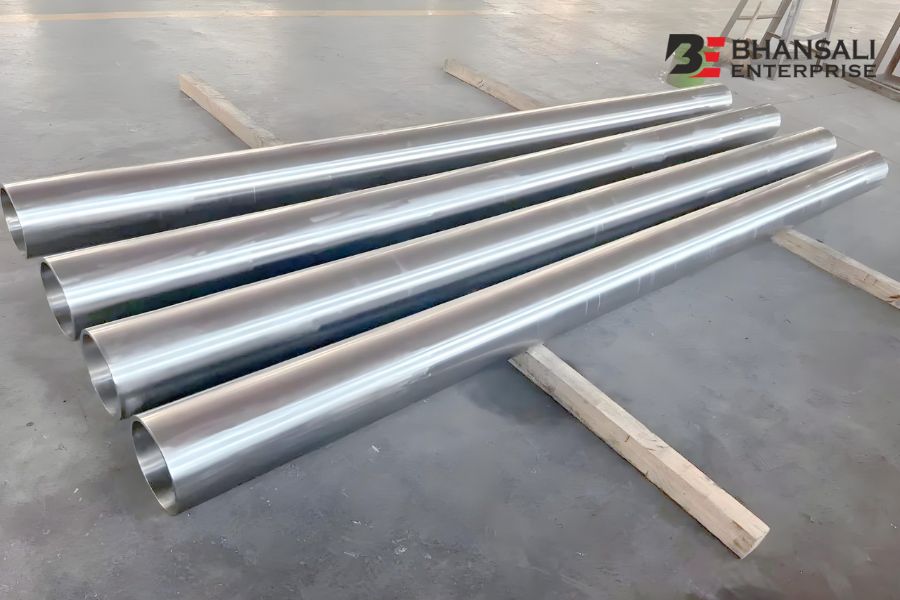
Alloy 625 pipes combine a nickel-chromium-molybdenum composition with corrosion resistance that few piping materials match. Engineers specify Alloy 625 Pipes when a system faces aggressive chemicals, high heat and mechanical stress together. Inconel 625 Pipes hold their mechanical properties in conditions that degrade standard stainless steel within months, keeping the alloy in demand across chemical plants, offshore platforms and marine installations.
What Are Alloy 625 Pipes?
Alloy 625 pipes are nickel-based tubular products reinforced with chromium and molybdenum. Suppliers list them as Inconel 625 Pipes, Inconel Alloy 625 Pipes and UNS N06625 Pipes, referring to the same base composition. Chromium forms a stable oxide layer on the surface, and molybdenum reinforces that layer against localised damage, so the alloy resists pitting and crevice corrosion compared to 316L stainless steel. Manufacturers supply pipes in seamless and welded forms across multiple diameters and wall thicknesses for chemical lines, subsea systems and high-temperature process units.
Key Properties of Alloy 625 Pipes
Alloy 625 resists a wide range of corrosive media, including seawater, mineral acids, and mixed process chemicals, without the rapid metal loss seen in standard stainless grades. In chloride-containing environments such as offshore produced water, its molybdenum content limits pitting and crevice corrosion at joints.
Service temperature capability extends from cryogenic conditions up to roughly 980°C, with good resistance to oxidation near the upper end. Weldability is good, though qualified procedures and matching filler metal remain necessary to protect the heat-affected zone.
Benefits of Using Inconel 625 Pipes
Long-term resistance to corrosive service conditions reduces how frequently a pipe needs maintenance. Inconel 625 piping retains its wall thickness and structural integrity for a longer service span when specified correctly. Reliable mechanical performance under pressure and temperature swings lowers the risk of failure in critical lines. Its resistance to pitting and crevice attack benefits systems handling seawater and acidic streams, while its performance across several applications lets procurement teams standardise on one grade.
Industrial Applications of Alloy 625 Pipes
Chemical processing plants route Alloy 625 pipes through systems handling aggressive acids and corrosive intermediates, where standard stainless steel would need early replacement. Oil and gas operators specify the alloy for offshore piping and downhole applications carrying corrosive gases or high chloride content. The marine industry’s use centres on seawater systems, where constant chloride exposure demands strong pitting resistance. Corrosion-resistant Alloy 625 pipes operate in shipboard piping exposed to continuous saltwater contact. Power generation facilities install the alloy in heat-resistant piping and aerospace manufacturers use it in fluid transport components where weight and corrosion resistance combine.
How to Choose the Right Alloy 625 Pipe
Start with pipe size and wall thickness, since these set flow capacity and pressure rating together. Choose between seamless and welded construction. Seamless suits high pressure and critical service, while welded options often meet lower pressure needs at reduced cost. Confirm the operating temperature and pressure range and identify the corrosive media in contact with the pipe wall. Account for mechanical loading alongside the relevant ASTM or ASME specification. Surface finish and dimensional tolerances affect fit and installation. Request inspection reports and full traceability from an Alloy 625 Pipe Supplier that can provide accurate specifications.
Why Select a Reliable Alloy 625 Pipe Supplier?
Material traceability confirms the pipe in hand matches its certified heat and chemical composition, which matters where failure carries real consequences. Consistent dimensional quality across a full order avoids costly repairs during installation. Suppliers should provide test certificates and inspection documentation covering mechanical properties and chemical composition. Compliance with the specified standard, such as ASTM B444 or ASME SB444, protects the buyer from off-spec material. Availability across the sizes a project needs reduces delays and technical support helps match the correct pipe schedule. Verify grade, specification, and testing requirements before ordering.
Conclusion
Alloy 625 pipes deliver corrosion resistance, strength and reliable performance in demanding piping applications. Chemical processing, oil and gas, marine, power generation and aerospace sectors all depend on this alloy, where inferior materials fail prematurely. Correct material selection, matched to actual service conditions and the applicable standard, determines whether a piping system meets its expected service life. Suppliers like Bhansali Enterprise supply Alloy 625 pipes with the documentation engineers require for selection. Contact Bhansali Enterprise to request a quote and certification package for your next Alloy 625 pipe order.