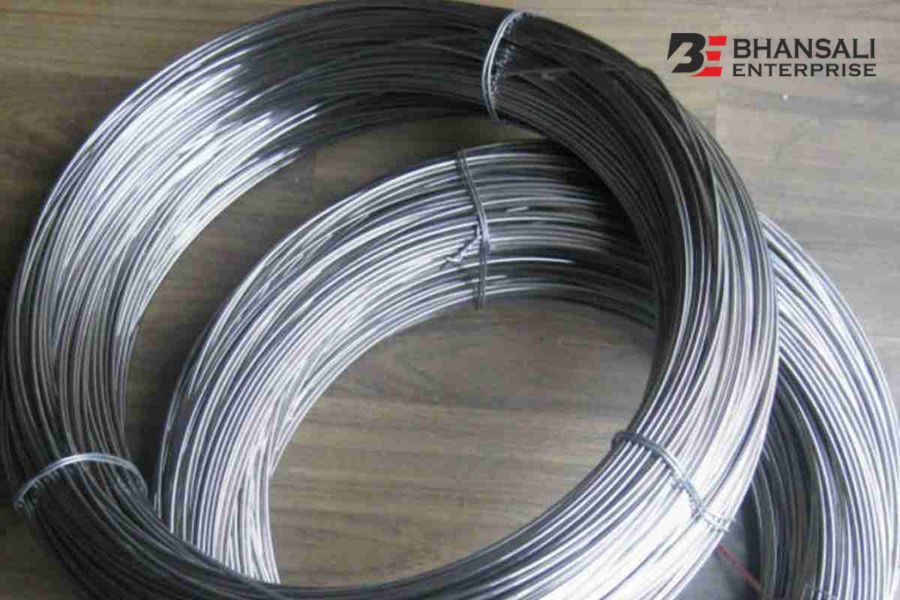
Every welded joint depends on more than just heat and technique; the material added to the joint matters just as much. Filler wire is the added material, and it’s what actually bridges the gap between two pieces of base metal to form a joint that holds under load. Get the filler wire wrong, and even a technically sound weld can end up weaker than the metal around it. Filler wire for welding is available in numerous grades and forms to suit different base metals, welding processes, and service conditions. and service condition, which is exactly why choosing the right one deserves more attention than it usually gets.
What Is Filler Wire?
Filler wire is a metal wire fed into a weld joint during welding, melting alongside the base metal to fill the gap and fuse the two pieces together. As it melts, it mixes with the molten base metal to form the weld bead, so its composition directly affects the strength, corrosion resistance, and overall quality of the finished joint. Base metal is the material being joined; filler metal is what’s added to join it, and the two don’t have to be identical, but they do have to be compatible in composition, melting behaviour, and mechanical properties. Selecting a filler material that’s mismatched with the base metal can lead to cracking, poor fusion, or a joint that corrodes faster than the surrounding metal. Industrial Filler Wire selection typically starts with matching the alloy family before narrowing down to a specific grade.
Types of Welding Filler Wire
- Solid Filler Wire – used widely in MIG and TIG welding for clean, consistent welds on steel, stainless steel, and aluminium.
- Flux-Cored Wire – contains a flux core that shields the weld, making it well suited to outdoor work and thicker sections.
- TIG Filler Wire – fed manually into the arc for precise, high-quality welds on thinner or critical components.
- MIG Welding Wire – feeds continuously through the gun, favoured for its speed on production welding lines.
- Specialty Alloy Filler Wire – covers nickel alloys, titanium, and other grades needed for corrosion-resistant or high-temperature applications.
Benefits of Using the Right Welding Filler Wire
Choosing correctly pays off across the entire life of the weld. Strong weld integrity comes first, since a properly matched filler holds up under the loads the joint was designed for. Better corrosion resistance follows naturally when the filler’s alloy composition suits the service environment. Improved mechanical properties, enhanced weld appearance, and reduced defects and rework all follow from the same decision. Choosing the right Welding Filler Wire the first time also reduces the cost and downtime associated with weld repairs and rework. Longer service life and consistent welding performance round out the case for getting this choice right from the start.
Applications of Filler Wire for Welding
- Oil & Gas: Pipeline welding: Filler wire matched to pressure ratings, corrosive service conditions
- Construction: Structural steel construction shall employ filler wire in accordance with code specifications for load bearing joints.
- Shipbuilding: Marine grade filler wire resists seawater exposure in all hull and deck welding.
- Automotive: Body and chassis welding uses filler wire for thin-gauge steel and aluminium components.
- Aerospace: Speciality filler wire is required for precision items that meet with strict aerospace material standards.
- Chemical Processing: Welded connections in tanks and pipelines exposed to very harsh chemicals are coated with corrosion-resistant filler wire.
- Power Generation: High-temperature filler wire is used for welding boilers and turbine components.
- Manufacturing & Fabrication: Solid and MIG filler wire for general fabrication activities in normal production welding.
Common Mistakes to Avoid When Selecting Filler Wire
- Choosing an incompatible filler material for the base metal.
- Ignoring welding procedure specifications during selection.
- Using damaged or contaminated wire that compromises weld quality.
- Selecting incorrect wire diameter for the joint or equipment.
- Overlooking environmental conditions like humidity or wind exposure.
- Failing to meet required industry standards and certifications.
Conclusion
Filler wire plays a far bigger role in weld quality than its size suggests, and selecting the right material and type is what separates a joint that lasts from one that fails early. Proper storage and correct application matter just as much as the initial selection, since even the right wire underperforms if it’s been left exposed to moisture or contamination. For projects that need dependable Filler Wire across a range of grades and types, at Bhansali Enterprises, we supply the industrial filler wire options covered in this guide, ready to match whatever base metal and service condition your welding work demands.