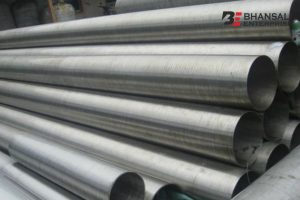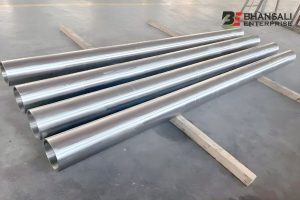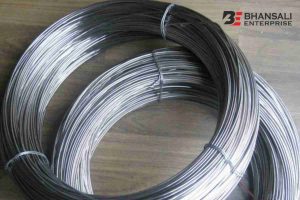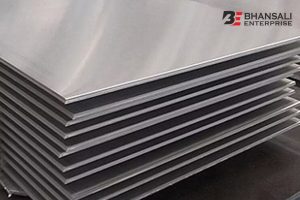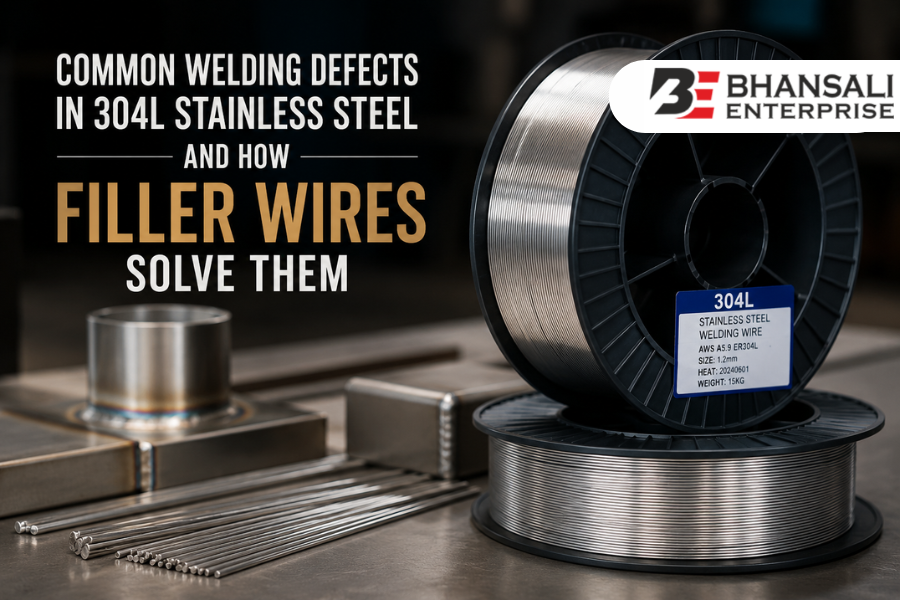
304L stainless steel is one of the most frequently welded austenitic grades in food processing, chemical plants, pharmaceutical systems, architectural fabrication, and industrial piping. The low carbon content makes it more forgiving than standard 304, and for most applications, it performs reliably.
But weldability does not mean defect-free welding. Improper practices, wrong filler selection, or poor preparation can affect corrosion resistance, structural integrity, and long-term joint behaviour. Selecting the correct SS 304L filler wire directly determines whether the weld will hold up in service. This blog covers the common defects and how the right ER304L filler wire addresses them.
Why Welding Quality Matters in 304L Stainless Steel Applications
In stainless steel applications, the weld zone is often the weakest point for corrosion initiation. If the filler chemistry is off or heat input is excessive, the weld and heat-affected zone (HAZ) can lose the corrosion resistance that makes 304L worth using.
In pharmaceutical processing and food-grade piping, surface contamination or pitting in a weld is a hygiene concern. In chemical equipment and pressure systems, a defective weld leads to leaks or failure. These are documented causes of downtime and regulatory non-compliance. Getting the weld right the first time is always more affordable than rework or premature replacement.
Common Welding Defects in 304L Stainless Steel
Hot cracking during or just after solidification is a known problem with austenitic stainless steels. If Sulphur and phosphorus levels are elevated, or if the filler chemistry does not match the base metal, cracking occurs along grain boundaries. Excess heat input compounds the problem.
Weld Cracking
Low carbon stainless steel filler wire helps in two ways. It keeps carbon below 0.03%, reducing carbide formation, and a correctly formulated ER304L filler wire carries controlled ferrite in the weld deposit, which improves hot crack resistance. Stainless steel weld defect prevention at this stage is mostly about filler selection and heat control together.
Porosity in Welds
Porosity shows up as gas pockets trapped in the solidified weld metal. It weakens the joint and creates sites for crevice corrosion. Causes include moisture on the base material or wire surface, inadequate shielding gas coverage, and dirty base metal.
High-quality SS 304L filler wire is produced with tight controls on surface cleanliness and chemistry, reducing contamination risk from the consumable side. Proper gas flow, clean base material, and correct wire storage handle the rest.
Intergranular Corrosion
This is one of the more serious defects in stainless steel welding, and it is the primary reason 304L exists as a separate grade from standard 304.
During welding, the HAZ is exposed to temperatures between 450°C and 850°C. Carbon combines with chromium to form carbides along grain boundaries, depleting chromium from the surrounding area. This process, called sensitization, leaves those zones vulnerable to corrosion. Standard 304, with carbon up to 0.08%, is significantly more prone to this. 304L limits carbon to 0.03%.
ER304L filler wire maintains this low carbon composition in the weld deposit. Chromium depletion is minimized, and corrosion resistance in the as-welded zone is preserved. For chemical plants or pharmaceutical systems with exposure to corrosive media, using the correct low carbon stainless steel filler wire is a requirement, not a preference.
Distortion and Warping
Austenitic stainless steel expands more during welding and contracts more on cooling compared to carbon steel. In thin sections or complex assemblies, this creates distortion that affects fit-up and surface finish requirements.
Proper 304L welding consumables support stable arc behaviour and predictable deposition. When the arc is inconsistent, welders compensate with more heat, which worsens distortion. Controlled interpass temperature and good joint preparation also reduce the problem.
Lack of Fusion and Incomplete Penetration
Both defects come down to the weld pool not bonding properly with the base material. Causes include incorrect travel speed, wrong amperage, poor joint preparation, or an incompatible filler wire.
304L welding consumables formulated for this grade support better arc stability and fluid pool behaviour. But the operator still needs the correct parameters. A filler wire cannot compensate for fundamentally wrong settings.
How 304L Filler Wires Improve Welding Performance
Improved Corrosion Resistance
The low carbon composition of ER304L filler wire limits carbide formation. Chromium stays in solid solution across the weld and HAZ, keeping corrosion resistance close to that of the base metal. This is relevant in food contact, chemical, and water treatment environments where the weld zone faces the same exposure as the surrounding material.
Better Arc Stability and Weld Appearance
A properly drawn 304L TIG welding wire feeds and melts consistently, giving the welder predictable control over the bead profile. Clean wire produces a cleaner bead, less spatter in MIG applications, and better fusion at the toes. For pharmaceutical or food-grade work with surface finish requirements, this has practical consequences.
Enhanced Mechanical Strength
The weld deposit from ER304L filler wire has good tensile strength and ductility, important in structural fabrication, pressure piping, and industrial assemblies. Ductility matters especially in applications subject to vibration or thermal cycling, where a brittle weld will crack under repeated stress.
Industrial Applications Using 304L Filler Wires
- Food processing equipment and conveyor systems
- Pharmaceutical tanks and vessel fabrication
- Dairy piping systems and fittings
- Chemical processing plants and storage vessels
- Heat exchangers with stainless internals
- Stainless steel fabrication workshops
- Industrial storage vessels and pressure containers
Best Practices to Reduce Welding Defects in 304L Stainless Steel
Surface preparation
Remove oil, grease, scale, and moisture before welding. Use dedicated stainless steel brushes.
Shielding gas
Use the correct gas for the process. Pure argon for TIG, argon-rich mix for MIG. Check flow rates before starting.
Heat input control
Keep interpass temperature below 150°C. Excess heat accelerates sensitization and distortion.
Welding parameters
Set amperage, voltage, and travel speed correctly for the wire diameter and joint. Use qualified procedure specifications where applicable.
Filler wire storage
Keep wire sealed until use. Moisture on the wire surface causes porosity. Store in a dry area.
Correct filler selection
Use ER304L filler wire for 304L base material. Mixing grades or using generic stainless consumables introduces risk to weld chemistry and corrosion performance.
Conclusion
Welding 304L stainless steel correctly requires attention to both process and consumables. Hot cracking, porosity, intergranular corrosion, distortion, and incomplete fusion are preventable defects. The correct stainless steel welding filler wire addresses several of these at the metallurgical level. Good shop floor practice handles the rest. Bhansali Enterprises supplies stainless steel welding consumables across food, chemical, pharmaceutical, and industrial fabrication sectors. As a reliable Stainless Steel 304L Wire Supplier, we stock ER304L grades for TIG and MIG applications. Contact our team for product details or technical guidance.